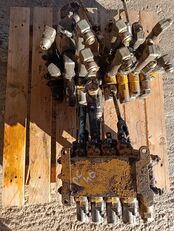
Distribuidor hidráulico para Komatsu PC30MR-2 miniexcavadora


Si decide comprar maquinaria a un precio inferior, póngase en contacto con el verdadero vendedor. Recopile toda la información que le sea posible sobre el propietario de la maquinaria. Una forma de engaño es presentarse como empresa. En caso de sospecha, infórmenos mediante el formulario de comentarios y sugerencias para que lo comprobemos.
Antes de confirmar una compra, revise detenidamente varias ofertas de venta para ver cuál es el precio medio del equipo elegido. Si el precio de la oferta que le interesa es mucho menor que el de ofertas similares, piénselo dos veces. Una diferencia de precio significativa puede conllevar a defectos ocultos o a un intento de fraude por parte del vendedor.
No compre productos cuyo precio diste mucho del precio medio de equipos similares.
No acepte compromisos dudosos o mercancías con prepago. Si no lo tiene claro, no dude en solicitar aclaraciones, pida fotos adicionales y documentos del equipo, compruebe la autenticidad de los mismos y pregunte todo lo necesario.
Esta es la forma más habitual de fraude. Ciertos vendedores pueden requerir una cantidad del pago por adelantado en concepto de «reserva» de su compra. Así, los estafadores perciben grandes cantidades de dinero y después desaparecen sin dejar huella.
- Transferencia de prepago a la tarjeta
- No realice un pago por adelantado sin documentación que confirme el proceso de transferencia de dinero, si durante la comunicación con el vendedor ha surgido alguna duda.
- Transferencia a una cuenta «fiduciaria»
- Dicha solicitud debe alarmarle, ya que en la mayoría de los casos se trata de fraudes.
- Transferencia a una cuenta de una empresa con un nombre similar
- Tenga cuidado, ya que los estafadores pueden ocultarse tras la identidad de empresas reconocidas, realizando modificaciones mínimas en su nombre. No transfiera dinero si tiene dudas sobre el nombre de la empresa.
- Sustitución de sus propios datos en la factura de una empresa real
- Antes de realizar una transferencia, asegúrese de que los datos especificados sean correctos y que aludan a la empresa en cuestión.
Contactos del vendedor

 +86 189 289...
+86 189 2896 5241


 China

 China


 China

 Rumanía, Seini
 Rumanía, Seini
Product Overview
The PC30MR‑2 is Komatsu's compact‑radius micro excavator — a 3‑ton machine built for the tightest work there is: digging alongside house foundations, working inside building footprints, and fitting through gateways a wheelbarrow barely clears. On a machine this small, the main control valve is the component that turns a toy into a tool. It takes the pump's limited flow and meters it with precision to boom, arm, bucket, swing and tracks, so the operator can work inches from a wall without damaging it.
On a worked PC30MR‑2, valve wear shows up as sloppiness that is hard to forgive at this scale. The boom drifts down while holding a bucket, the swing jerks and overshoots, the tracks surge when an attachment is cycled, and the machine stops tracking straight on a slope. Inside the block, worn spools and scored bores are bleeding oil across circuits. This aftermarket main valve replaces the whole assembly with fresh internals, set to the correct Komatsu pressures, so the old block comes off and the new one bolts straight back on.
Core Advantages
1. Micro‑scale precision for macro‑tight work
At 3 tons, control is everything. Lapped spools restore the fine metering that lets an operator work inches from a foundation wall without the jumpy response of a worn valve.
2. The boom stays put through an idle
Drift under a held bucket is oil escaping past worn spool lands. Fresh spool‑and‑bore pairs hold position, so the bucket does not sink while the operator checks the work.
3. Swing that does not knock the walls
Scored bores make the house jerky — overshoot, then a hunt back. New internals restore clean rotation, essential when swinging beside a building footprint.
4. Tracks that track straight again
The valve sets flow priority between travel and working circuits. New internals restore the correct order, ending the surge and the crab‑walk on slopes that a worn valve produces.
5. A complete block for a machine that earns in a day
Re‑spooling a worn micro valve on the bench is fiddly, hours‑long work. Swapping in this tested assembly is one clean exchange with the same hose positions — a day's job on a machine that earns by the hour.
Manufacturing & Quality Control
Spool and bore pairs are finished to close clearance and run‑in on the bench to confirm free movement without stick‑slip. Each completed valve is flow‑tested across its circuits, with relief and compensator settings logged before acceptance; anything off spec is stripped and reworked. The finished block is oil‑fogged, port‑plugged and shipped on compact cushioned packing.
Frequently Asked Questions
Q1: How do I confirm this fits my PC30MR‑2?
A: Send the machine serial number and a photo of the old valve's tag. Komatsu build variants across the MR‑2 run can differ, so we confirm before dispatch.
Q2: What symptoms mean the valve is worn?
A: Boom drift, jerky or overshooting swing, tracks that surge when attachments are cycled, and poor straight‑line tracking on slopes. A leak test will confirm before you commit.
Q3: Is this the same valve as the PC50 or PC60?
A: No — the PC30MR uses a smaller valve with different porting and flow rates. The sizes are not interchangeable without major plumbing changes.
Q4: Can my existing valve be repaired?
A: If the block casting is sound, a re‑spool and seal kit often restores it. Send photos and we will advise honestly on repair versus replacement cost.
Q5: Can this be shipped by express courier?
A: Yes — a compact valve this size ships well by air or express, often faster and cheaper than sea freight for a single unit. Tell us the destination and we will quote the fastest option.
Q6: What voids the warranty?
A: Materials and build defects are covered. Damage from contaminated oil, water ingress, a seized spool forced into movement or incorrect pressure adjustment is excluded. Photograph any arrival damage before uncrating.