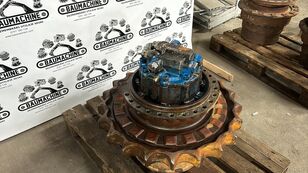
Hitachi HMGC16 transmisión final para Hitachi EX120-2 EX120-3 excavadora midi


Si decide comprar maquinaria a un precio inferior, póngase en contacto con el verdadero vendedor. Recopile toda la información que le sea posible sobre el propietario de la maquinaria. Una forma de engaño es presentarse como empresa. En caso de sospecha, infórmenos mediante el formulario de comentarios y sugerencias para que lo comprobemos.
Antes de confirmar una compra, revise detenidamente varias ofertas de venta para ver cuál es el precio medio del equipo elegido. Si el precio de la oferta que le interesa es mucho menor que el de ofertas similares, piénselo dos veces. Una diferencia de precio significativa puede conllevar a defectos ocultos o a un intento de fraude por parte del vendedor.
No compre productos cuyo precio diste mucho del precio medio de equipos similares.
No acepte compromisos dudosos o mercancías con prepago. Si no lo tiene claro, no dude en solicitar aclaraciones, pida fotos adicionales y documentos del equipo, compruebe la autenticidad de los mismos y pregunte todo lo necesario.
Esta es la forma más habitual de fraude. Ciertos vendedores pueden requerir una cantidad del pago por adelantado en concepto de «reserva» de su compra. Así, los estafadores perciben grandes cantidades de dinero y después desaparecen sin dejar huella.
- Transferencia de prepago a la tarjeta
- No realice un pago por adelantado sin documentación que confirme el proceso de transferencia de dinero, si durante la comunicación con el vendedor ha surgido alguna duda.
- Transferencia a una cuenta «fiduciaria»
- Dicha solicitud debe alarmarle, ya que en la mayoría de los casos se trata de fraudes.
- Transferencia a una cuenta de una empresa con un nombre similar
- Tenga cuidado, ya que los estafadores pueden ocultarse tras la identidad de empresas reconocidas, realizando modificaciones mínimas en su nombre. No transfiera dinero si tiene dudas sobre el nombre de la empresa.
- Sustitución de sus propios datos en la factura de una empresa real
- Antes de realizar una transferencia, asegúrese de que los datos especificados sean correctos y que aludan a la empresa en cuestión.
Contactos del vendedor

 +86 189 289...
+86 189 2896 5241


 China


 China


 China


 China

 China


 China


 China


 China

 China


 China


 China


 China


 Rumanía, Maramures
Product Overview
The EX120‑2 and EX120‑3 are the middle chapters in Hitachi's compact‑12 story — smaller cousins of the EX200, built for crews that need real dig depth without the weight of a 20‑ton machine. Decades on, these old Hitachis are still knocking around on small subdivisions, pond jobs and farm drainage, because they are simple to fix and forgiving on fuel. Under each track frame sits the HMGC16 axial piston motor and planetary reducer — the unit that turns pump flow into the slow, torque‑rich rotation pulling the 12‑ton frame across soft ground.
On an EX120 this age, the drive rarely dies suddenly. It wears down in stages: one track drifts on a straight, the track shell warms after a trundle, and a new hum works into the floor. Operators nurse it, but by the time a track hesitates on a bank, the piston block has already been shedding swarf into the oil. This aftermarket unit reproduces the HMGC16 as one sealed, bench‑run assembly, matching both the ‑2 and ‑3 builds, so the worn drive lifts out and the new one bolts straight in.
Core Advantages
1. Keeps a legacy 12‑ton machine earning
Original HMGC16 drives for the ‑2 and ‑3 builds grow scarcer every year. This aftermarket unit gives owners a path to keep a still‑useful old Hitachi on the job rather than writing it off over a dead track.
2. Simple, tough gearing that wears slowly
The HMGC layout has none of the complexity of later drives — just hardened planetary teeth meshing cleanly. No electronics to fail, no sensors to blame, just gears that last when kept sealed.
3. Even pull between the two tracks
A lapped piston block and valve plate hold pressure internally, so neither track lags. The machine tracks straight across a yard without the operator fighting a sideways tug.
4. Sealed against mud and dust of small‑site work
Old EX120s work through long days in muddy yards, puddles and dust. Fresh shaft and housing seals keep that grit out of the lube — the protection that decides whether the drive reaches its next overhaul.
5. A direct, no‑nonsense fit
Flange, studs and ports reproduce the original, so removal and refitting follow the old Hitachi manual. No adapters, no fabrication, no guessing.
Manufacturing & Quality Control
Components are machined to the original HMGC drawing, heat‑treated where wear bites, and assembled in a clean area. Each finished drive runs on a hydraulic stand while torque, leakage and noise are checked; units outside tolerance are reworked before packing. The internals are fogged with preservation oil, ports are plugged, and the unit is crated on dunnage for freight.
Frequently Asked Questions
Q1: How do the ‑2 and ‑3 drives differ?
A: The HMGC16 platform is shared across both builds, with minor internal changes over the production run. Send the machine serial number and we confirm the exact internal spec before dispatch.
Q2: Can this replace an earlier EX120‑1 drive?
A: Physically the HMGC16 family is very close, but port orientation and output spline can differ between builds. Send photos of the old drive and we will tell you honestly whether it is a straight swap.
Q3: What is the usual turnaround for an old EX120 owner?
A: Stocked units leave within days. Once it arrives, a home workshop with a track lift can often do the swap over a weekend — these old Hitachis are built to be serviced.
Q4: Do you sell just the internals if I can reuse the housing?
A: The listing is the complete assembly. If you are repairing rather than replacing, ask about piston kits, valve plates and gear sets — we can usually supply them separately.
Q5: How should I store the spare drive?
A: Keep it sealed in its crate, off the concrete and out of weather. The preservation oil and plugged ports protect the internals for months — do not unwrap until you are ready to fit.